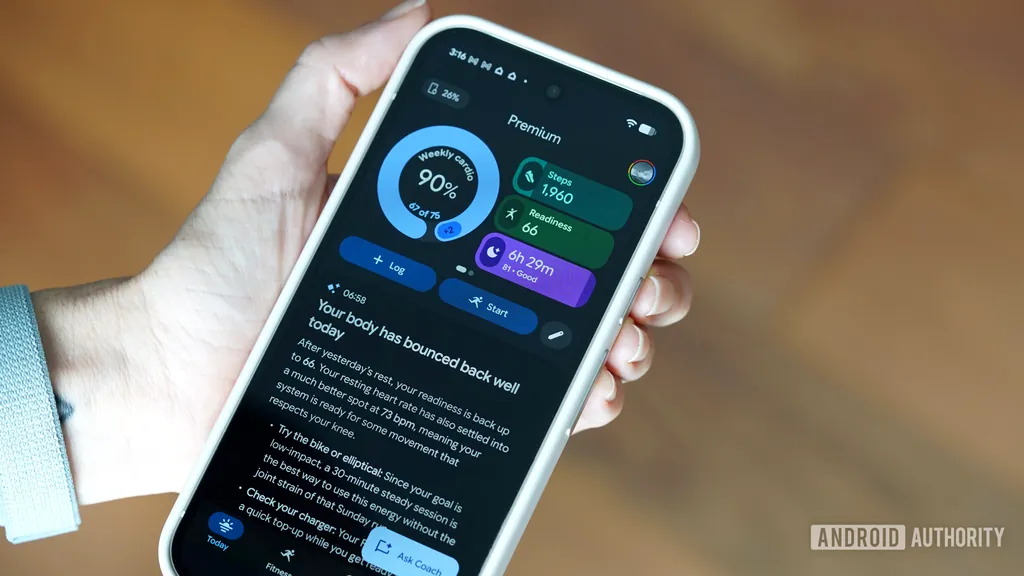










Have you ever thought that your smartphone could be more than just a communication tool? Well, it might soon be a smartphone heart rate monitor too! Google has been working on a groundbreaking technology that allows your phone to estimate your heart rate using just its front-facing camera. This innovative approach could change the way we think about health tracking.
Table of Contents
- What is a Smartphone Heart Rate Monitor?
- How Does It Work?
- Benefits of Using a Smartphone Heart Rate Monitor
- How to Track Heart Rate with Smartphone
- The Future of Health Tracking
- Conclusion
What is a Smartphone Heart Rate Monitor?
A smartphone heart rate monitor is a feature that uses your phone’s camera to measure your heart rate. Instead of wearing a fitness band or smartwatch, you can simply look at your phone, and it will do the work for you. This technology, still in its research phase, can potentially measure your resting heart rate with impressive accuracy.
Essentially, it transforms your smartphone into a health monitoring tool, making it easier for individuals to keep track of their cardiovascular health. Imagine being able to monitor your heart rate with the same device you use to text friends or scroll through social media. This integration of technology into our daily lives could lead to a more health-conscious society.
How Does It Work?
So, how does this all work? Google’s system employs on-device AI to analyze the tiny changes in your skin color that occur with each heartbeat. When you look at your phone’s front camera, the software detects these changes and calculates your heart rate. According to tests, the accuracy is comparable to that of popular devices like the Fitbit Charge 6, with results often within five beats per minute.
This technology harnesses photoplethysmography (PPG), a method often used in medical settings. PPG works by shining a light onto the skin and measuring how much light is absorbed or reflected. The heartbeat causes a slight change in blood volume in the vessels, altering the skin’s color and allowing the device to estimate your heart rate. This method is not only innovative but also non-invasive, making it accessible to anyone with a smartphone.
Benefits of Using a Smartphone Heart Rate Monitor
There are several benefits to using a smartphone heart rate monitor:
- Accessibility: Almost everyone has a smartphone, making heart health monitoring accessible to billions without needing an expensive smartwatch.
- Convenience: You can check your heart rate anytime, anywhere, simply by looking at your phone. This is especially useful during workouts or moments of rest when you want to ensure your heart rate is within a healthy range.
- Cost-Effective: It eliminates the need to purchase additional health tracking devices. Many fitness trackers can be pricey, and this smartphone feature minimizes the financial barrier to entry for health tracking.
- Real-Time Monitoring: With the ability to check your heart rate at any moment, you can respond to your body’s needs more effectively. Whether you’re feeling under the weather or pushing through an intense workout, real-time data can guide your decisions.
- Data Storage and Analysis: Many apps not only provide immediate heart rate readings but also store historical data. This allows users to track trends over time, fostering a better understanding of their heart health.
How to Track Heart Rate with Smartphone
Tracking your heart rate with your smartphone is straightforward. Here’s how to do it:
- Open the App: Start by downloading a health tracking app that supports heart rate monitoring. Look for apps that utilize your phone’s camera, as they will have the necessary functionality.
- Position Your Phone: Hold your phone at eye level, ensuring the camera is facing your face. Make sure you are in a well-lit area to get the best results.
- Stay Still: Remain still and calm for a few seconds while the app analyzes your heart rate. This step is crucial; any movement can disrupt the readings.
- Read Your Results: After a few moments, the app will display your heart rate. It may also provide additional context, such as whether your heart rate is in a healthy range.
It’s that simple! You can easily check your heart rate throughout the day, helping you stay informed about your heart health. Many users find it beneficial to incorporate this practice into their daily routine, much like checking their email or social media.
The Future of Health Tracking
The potential of smartphone heart rate monitors is just the beginning. As technology advances, we can expect even more features, such as tracking other vital signs, providing insights into overall health, and even alerting users when their heart rates reach concerning levels. This could lead to significant improvements in health management for everyone.
Imagine a future where your smartphone could alert you to irregular heart rhythms or potentially dangerous spikes in heart rate, allowing for early intervention. This could be particularly valuable for individuals with pre-existing conditions, providing them with a tool for proactive health management. Furthermore, with the integration of artificial intelligence and machine learning, these apps could learn from your historical data, offering personalized health tips and predictions.
Moreover, this technology could become a fundamental component of telemedicine, where healthcare providers can monitor patients remotely, reducing the need for in-person visits. This could be a game changer, particularly for those with mobility issues or those living in remote areas.
Conclusion
In summary, Google’s work on a smartphone heart rate monitor could reshape how we approach health tracking. By making heart rate monitoring accessible through our phones, it opens up new opportunities for millions of people to keep tabs on their cardiovascular health without needing extra devices. If you’re interested in this groundbreaking technology, keep an eye on developments from Google and see how you can take advantage of a smartphone heart rate monitor in your daily life. For more information, check out the full details from Android Authority.